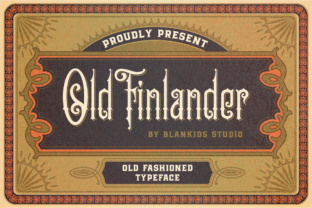
Old Finlander: A Victorian-Inspired Display Font
The right typeface does more than just display words; it establishes a mood, tells a story, and instantly communicates a brand's essence. For designers seeking a touch of historical elegance and intricate detail, Old Finlander emerges as a compelling solution. This gorgeous display font, inspired by Victorian style and crafted with ornamental elements, offers a unique blend of vintage charm and contemporary utility, making it a versatile asset for a multitude of creative projects.
Understanding the Visual Impact of Ornamental Typography
In the realm of graphic design and visual communication, typography is a foundational element of brand identity. A font like Old Finlander moves beyond basic legibility to become a central part of the aesthetic narrative. Its detailed serifs and decorative flourishes evoke a sense of craftsmanship, tradition, and premium quality. This makes it particularly effective for projects where the goal is to convey heritage, luxury, artisanal care, or a distinct period style. When used thoughtfully, such a typeface can elevate a design from ordinary to memorable, strengthening visual hierarchy and user engagement.
Practical Applications for Creative Professionals
The true value of a specialized typeface lies in its application. Old Finlander excels in scenarios that demand a bold, stylistic statement. Its inherent character makes it less suited for body text but perfect for headlines, logos, and display text where impact is paramount. Consider its use across various design disciplines:
- Branding & Logo Design: Ideal for brands in the artisan, heritage, luxury goods, or boutique hospitality sectors. It creates an immediate impression of sophistication and history.
- Marketing Materials: Use it for headlines in brochures, posters, and advertisements to draw the eye and set a thematic tone, especially for events like galas, vintage markets, or premium product launches.
- Social Media & Digital Content: Create striking graphics, headers, and promotional posts that stand out in a crowded feed. It adds a layer of visual sophistication to Instagram stories, Pinterest pins, and YouTube thumbnails.
- Packaging & Editorial Design: On product labels for specialty foods, spirits, or cosmetics, it conveys quality. In magazines or book covers, it can anchor a theme of classical literature, history, or fantasy.
- Website & UI Design: Strategically deployed in hero sections, titles, or navigation menus for specific website themes, it can enhance user experience by reinforcing the site's overall narrative.
Integrating a Display Font into Your Design Workflow
Successfully incorporating a character-rich font like Old Finlander requires a balanced approach to your overall design system. Here are key considerations for designers and creators:
- Prioritize Readability and Scale: Always test the font at the intended size. Its ornamental details shine in large formats but may become cluttered or illegible when reduced. Use it sparingly for maximum effect.
- Establish Visual Hierarchy: Pair Old Finlander with a clean, neutral sans-serif or a simple serif font for body text. This contrast ensures the display font commands attention without compromising the readability of longer copy.
- Consider Audience and Context: Does the Victorian aesthetic align with your target audience's expectations and the project's goals? A mismatch can confuse rather than communicate. It's perfect for a vintage tea room but may not suit a cutting-edge tech startup.
- Harmonize with Color and Imagery: The font's personality should complement your color palette and supporting imagery. Deep burgundies, forest greens, golds, and muted tones often work beautifully, while a minimalist, monochromatic scheme can let the typography itself be the star.
Ultimately, the choice of typography is a strategic decision that profoundly influences the effectiveness of visual design. Old Finlander is more than just a decorative typeface; it is a creative asset that, when used with intention, can significantly enhance branding, communication, and the overall quality of a project. By understanding its strengths and applying it within a coherent design framework, professionals can harness its ornamental beauty to create work that is not only aesthetically pleasing but also strategically sound and deeply engaging. Thoughtful selection of such assets is what separates good design from great design, ensuring every visual element works in concert to tell a compelling story.